

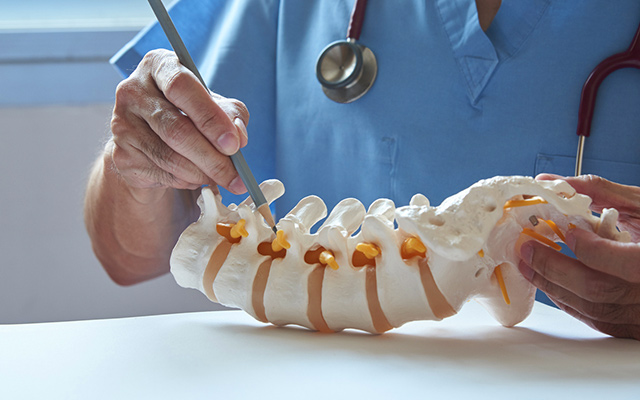
Minimally invasive spine surgery is a modern surgical approach designed to treat spinal conditions with precision while minimising disruption to surrounding muscles and tissues.
Instead of large incisions, it uses small access points and specialised instruments to target the problem directly. The goal is simple: fix what’s causing pain while preserving everything that doesn’t need to be touched.
Today’s post provides a clear, clinical overview of minimally invasive spine surgery, its benefits, limitations, and who qualifies.
What Is Minimally Invasive Spine Surgery?
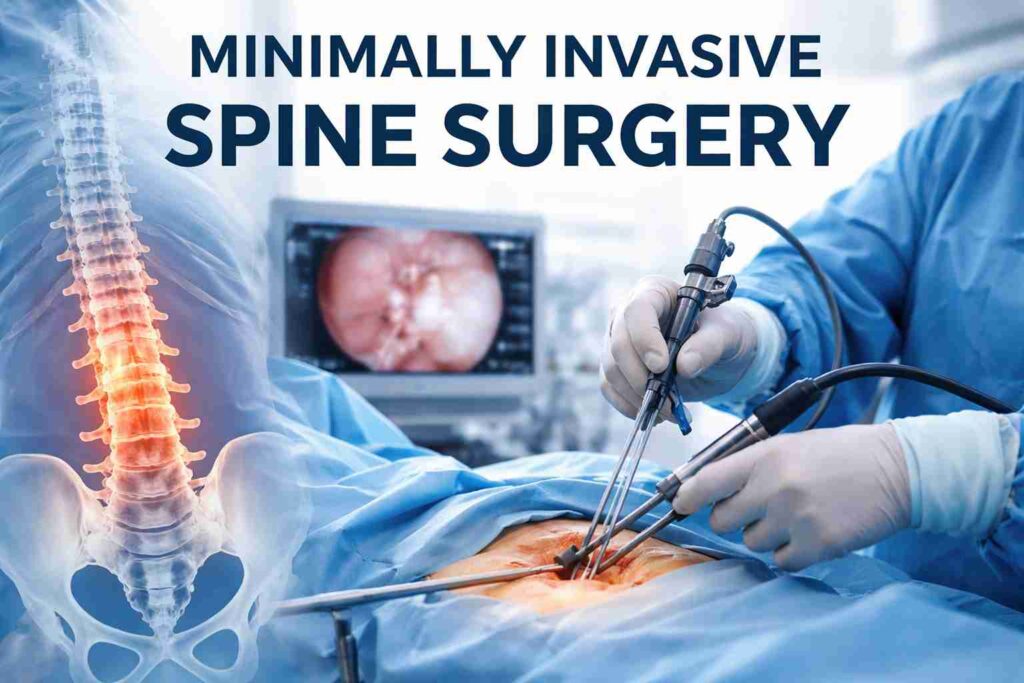
Minimally invasive spine surgery (MIS), also known as keyhole spine surgery, treats spinal conditions through small, targeted incisions while preserving muscles and surrounding tissues.
It uses natural tissue planes to minimise trauma, resulting in less pain and faster recovery compared to open surgery.
How Minimally Invasive Spine Surgery (MIS) Works
MIS relies on advanced imaging, specialised instruments, and high surgical precision to accurately target the affected area without extensive tissue disruption.
Core Techniques Used
- Tubular retractors: Create a controlled surgical corridor
- Endoscopic or microscopic visualisation: Enables high-precision surgery
- Real-time imaging guidance: Ensures accurate instrument placement
Effectiveness
When used in appropriately selected patients, minimally invasive spine surgery is a safe and effective alternative to traditional open surgery.
Also Known As ‘The Gold Standard Approach’
- Small, targeted incisions with direct access to pathology
- Muscle-sparing technique using natural tissue planes
- Tubular retractor systems for controlled access
- Endoscopic or microscopic guidance for precision
- Real-time imaging for accuracy
- Strong emphasis on surgical expertise and patient selection
Conditions Treated with Minimally Invasive Spine Surgery
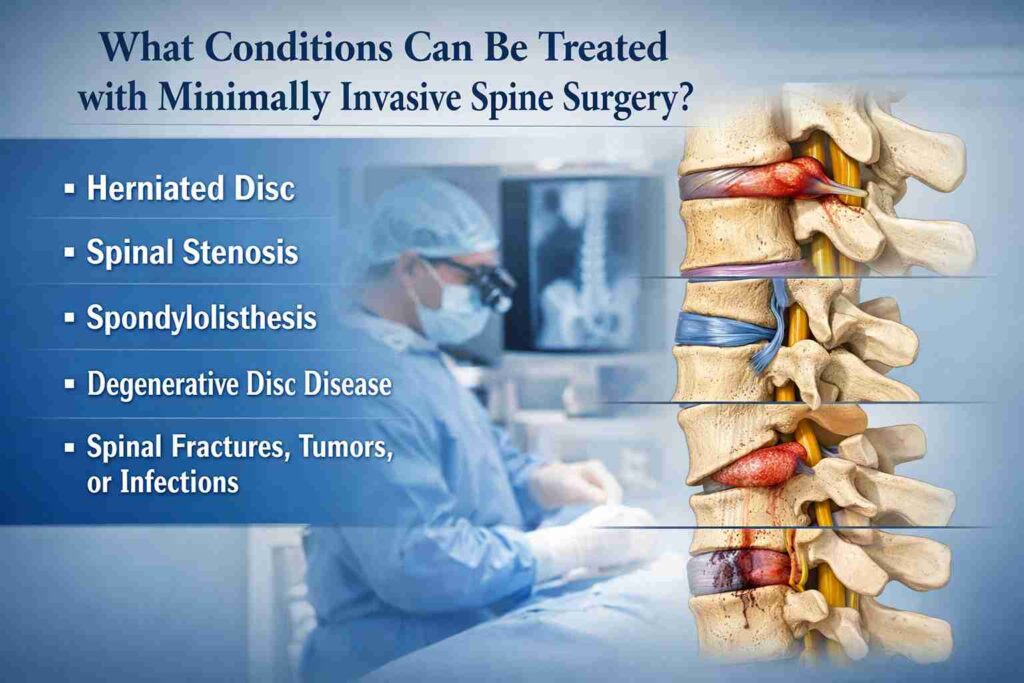
A herniated disc
Commonly called a slipped disc, it is one of the most frequently treated conditions. When conservative treatment fails, minimally invasive spine surgery for a herniated disc can relieve nerve pressure with minimal tissue disruption.
Spinal stenosis
Narrowing of the spinal canal can be treated through smaller incisions, allowing effective decompression without extensive surgery.
Spondylolisthesis
Where one vertebra slips over another, it may be managed with minimally invasive stabilisation techniques in selected cases.
Degenerative disc disease
When associated with nerve compression, it can be treated if symptoms correlate clearly with imaging findings.
Certain spinal fractures, tumours, or infections
Certain complex spinal conditions may be managed with minimally invasive approaches, provided individual suitability and careful evaluation are considered.
Benefits of Minimally Invasive Spinal Surgery
Less Muscle Damage and Reduced Blood Loss
One of the key benefits of minimally invasive spine surgery lies in how the spine is accessed. Instead of cutting through muscle, surgeons work between muscle fibres, preserving their structure and function. In procedures such as a lumbar discectomy, this significantly reduces tissue trauma and blood loss.
Significantly Less Postoperative Pain
As less tissue is disturbed during surgery, patients typically experience lower levels of postoperative pain. This translates to reduced reliance on pain medication and a more comfortable early recovery phase.
Shorter Hospital Stay and Day-Case Potential
Many procedures can now be performed with a short hospital stay, sometimes even as a day case. Endoscopic techniques in particular allow for efficient treatment with quicker discharge, reducing the overall burden on the patient.
Faster Recovery and Earlier Return to Life
Recovery after minimally invasive spine surgery is often faster compared to traditional methods. Patients are usually encouraged to mobilise early, sometimes within hours of the procedure. Those with desk-based jobs may return to work within a few weeks, while physically demanding roles may require a longer, structured recovery period.
Clinical Outcome Snapshot
| Parameter | Minimally Invasive Approach | Traditional Open Surgery |
| Muscle disruption | Minimal | Significant |
| Blood loss | Low | Moderate to high |
| Hospital stay | Same day / 1–2 days | 3–5 days |
| Pain level | Lower | Higher |
| Recovery speed | Faster | Slower |
Limitations of Minimally Invasive Spinal Surgery
Limited Surgical Exposure
Minimally invasive techniques operate through small corridors, which restrict direct visualisation and instrument movement. This can make complex, multi-level, or high-degree deformities more difficult to address compared to open surgery.
Technical Demands and Learning Curve
These procedures require a high level of surgical expertise and familiarity with specialised tools. Outcomes are closely tied to the surgeon’s experience, particularly during the early adoption phase.
Reliance on Imaging and Radiation
Real-time imaging (fluoroscopy) is essential for accuracy and safety. However, increased dependence on imaging can lead to higher cumulative radiation exposure.
Case Selection Limitations
Not all spinal conditions are suitable for minimally invasive approaches. Severe instability, tumours, or extensive scar tissue from prior surgeries may require traditional open techniques.
Risk of Incomplete Decompression
In certain cases—especially large or migrated disc herniations—complete removal of compressive elements can be technically challenging. This may affect surgical outcomes if not carefully managed.
Infrastructure and Resource Requirements
Minimally invasive spine surgery relies on specialised equipment and a dedicated setup. Limited availability of these resources can impact accessibility and consistency of care.
Dr Purnajyoti Banerjee, an experienced spinal surgeon in London, specialises in selecting the most appropriate treatment based on precise diagnosis, not trends.
Who Qualifies for Minimally Invasive Spine Surgery?

- Patients with persistent, severe back or neck pain
- Those experiencing numbness, tingling, or weakness
- Individuals diagnosed with a herniated disc, spinal stenosis, or instability
- Cases where symptoms clearly match imaging findings
- Patients not responding to physiotherapy, medication, or injections
How the Decision Is Made
| Step | What Is Assessed | Why It Matters |
| Clinical history | Pain pattern, duration | Identifies symptom origin |
| Physical exam | Neurological deficits | Confirms nerve involvement |
| Imaging (MRI/CT) | Structural abnormalities | Locates pathology |
| Correlation | Symptom + scan match | Ensures accuracy |
| Treatment response | Non-surgical outcomes | Needs surgery |
For a precise diagnosis and tailored treatment plan, consult Dr Purnajyoti Banerjee, a trusted spinal surgeon in London, known for evidence-based decision-making and patient-specific care.
Recovery After Minimally Invasive Spine Surgery

Recovery is typically faster and less painful than with traditional surgery, with a short hospital stay of 1–2 days (or less).
Return to Daily Activities
- Desk-based work: Resume in 2–4 weeks
- Physical work: Requires longer recovery and guided rehabilitation
- Physiotherapy: Supports strength and mobility restoration
Recovery Timeline
- Day 0–1: Mobilisation begins
- Week 1–2: Pain significantly reduces
- Week 2–4: Return to light work
- Week 6+: Gradual return to full activity
When To Not Delay Consultation?
Don’t delay if you:
- Experience persistent neck or back pain lasting more than six weeks
- Develop severe weakness, numbness, or radiating limb pain
- Notice loss of bowel or bladder control
Final Takeaway
Minimally invasive spine surgery (MISS) is a precision, muscle-sparing approach that treats conditions like herniated discs and spinal stenosis with less pain, faster recovery, and shorter hospital stays.
Its success depends on accurate diagnosis, careful patient selection, and surgical expertise—best suited for clearly defined cases that haven’t improved with conservative care.
Dr Purnajyoti Banerjee, an experienced spinal surgeon in London, can help ensure a clinically sound decision, a better recovery trajectory, and long-term spinal stability.
Book your consultation today at this email address: purnajyoti74@gmail.com.
People Also Ask
Is minimally invasive spine surgery safer than open surgery?
It can be safer in selected cases due to reduced tissue damage, lower infection risk, and quicker recovery. However, safety depends on patient selection and surgical expertise.
How long does recovery take after minimally invasive spine surgery (MISS)?
Most patients begin walking within hours and return to light activities within a few weeks. Full recovery varies depending on the procedure and individual factors.
Can all slipped discs be treated with minimally invasive surgery?
Not all cases require surgery, but when needed, minimally invasive spine surgery for a herniated disc is often an effective option if the condition is well-suited.
Is endoscopic spine surgery the same as minimally invasive back surgery?
Endoscopic surgery is a type of minimally invasive technique. While all endoscopic procedures are minimally invasive, not all minimally invasive surgeries are endoscopic.