

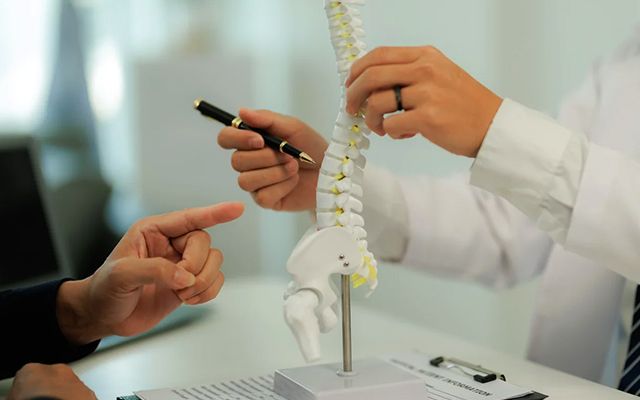
Disc replacement surgery is a procedure that involves removing a damaged spinal disc and replacing it with an artificial implant to preserve movement and relieve pain. Unlike fusion, which locks the segment, this approach maintains natural motion while addressing the underlying cause of symptoms.
It is typically considered when conservative treatments fail, and symptoms clearly match imaging findings.
Here’s a complete breakdown of indications, eligibility, procedure, risks, and recovery.
What Is Disc Replacement Surgery?
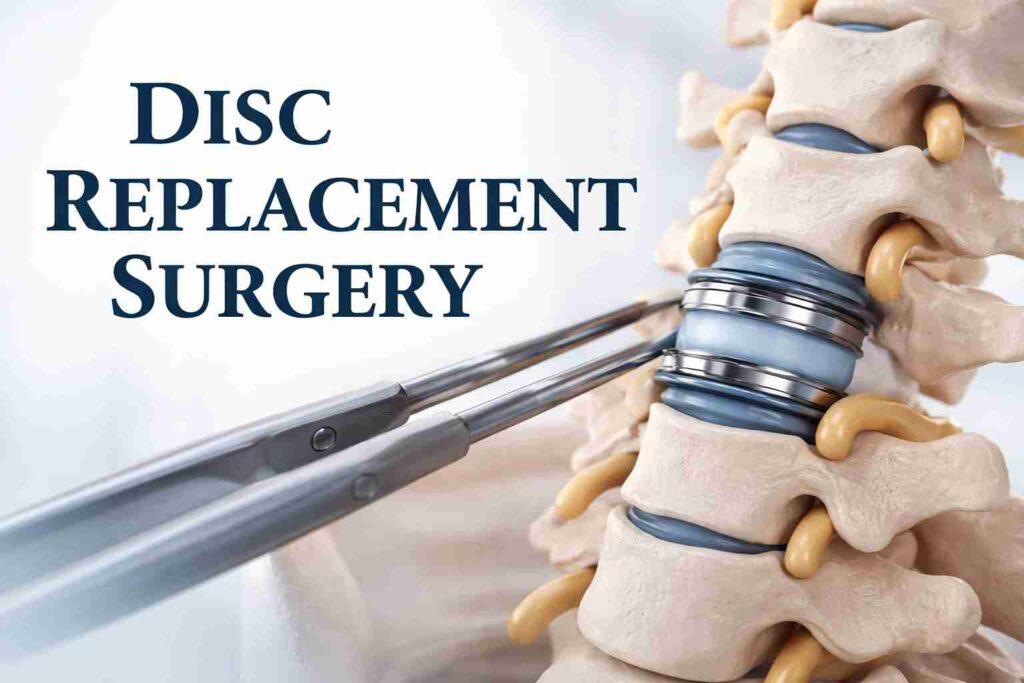
Disc replacement surgery, also known as artificial disc surgery, is designed to treat painful spinal disc conditions without permanently restricting movement. Instead of fusing two vertebrae together, the damaged disc is removed and replaced with a prosthetic implant that mimics natural disc function.
Let’s dive deeper.
How an Artificial Disc Replaces a Damaged Spinal Disc
The damaged disc is removed to relieve pressure on nerves. A prosthetic implant is then placed into the disc space to restore alignment, height, and function.
Why Disc Replacement Is Called Motion-Preserving Surgery
It is called motion-preserving because the treated spinal segment continues to move naturally. This helps reduce long-term stress on adjacent discs.
Cervical vs Lumbar Disc Replacement
- Cervical artificial disc replacement treats neck disc problems that often cause arm pain and neurological symptoms.
- Lumbar disc replacement treats lower back disc issues and leg pain.
Why Disc Replacement Surgery Is Done
Degenerative Disc Disease: Age-related disc breakdown leads to chronic pain and reduced spinal function.
Herniated Disc with Persistent Symptoms: Also known as a slipped disc, it is treated when nerve compression persists despite other treatments.
Radiating Neck, Arm, Back, or Leg Pain: Pain spreading to limbs indicates nerve involvement from a damaged disc.
Failure of Non-Surgical Treatment: Surgery is considered when physiotherapy, medications, and injections do not provide relief.
Table Overview: Symptom–Cause Mapping
| Symptom | Likely Disc Issue | Why It Matters |
| Neck pain with arm radiation | Cervical disc herniation | Indicates nerve compression in the neck |
| Lower back pain with leg pain | Lumbar disc pathology | Suggests sciatic nerve involvement |
| Persistent pain despite therapy | Degenerative disc disease | Signals structural disc damage |
| Numbness or tingling | Nerve root irritation | Confirms neurological involvement |
Who Is Eligible for Disc Replacement Surgery?

You may be a candidate if:
Your symptoms have a clear cause: Your pain matches MRI findings, confirming a specific damaged disc.
Conservative treatment hasn’t worked: Symptoms persist despite ≥3–6 months of structured non-surgical care.
The problem is limited: One or two discs are affected, not widespread degeneration.
Your spine is stable: No significant instability or deformity is present.
Your spine can still move: The affected disc level retains motion (not completely stiff).
Your bones and joints are healthy: Adequate bone strength, good alignment, and no advanced facet joint damage.
Who May Not Be a Good Candidate for Disc Replacement Surgery?
- Advanced facet joint arthritis
- Spinal instability or deformity
- Severe osteoporosis
- Multi-level degeneration in some cases
- Infection, tumour, or complex prior surgical history
Dr Purnojyoti Banerjee, a qualified doctor for disc replacement surgery in London, will determine suitability based on clinical and imaging findings.
Candidate Decision Snapshot: Who Qualifies & Who Doesn’t
| Criteria | Suitable |
| Single-level disc disease | YES |
| Symptoms match MRI | YES |
| Good bone quality | YES |
| Severe instability | NO |
| Advanced arthritis | NO |
Cervical Disc Replacement vs Lumbar Disc Replacement
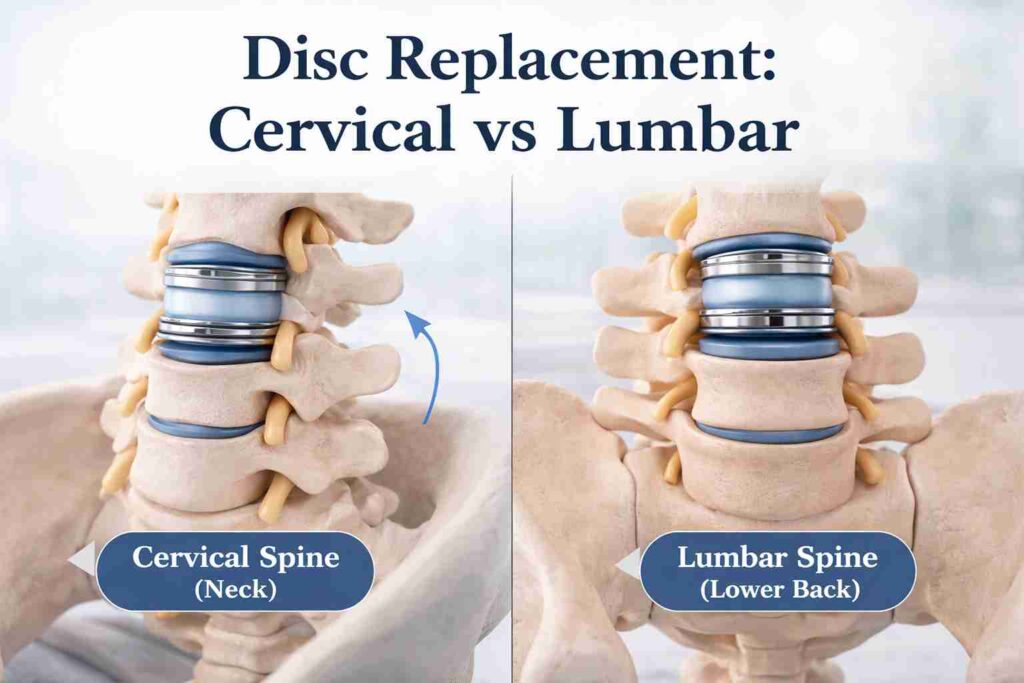
How Treatment Goals Differ
- Cervical spine: Emphasis on neurological symptom relief (arm pain, numbness)
- Lumbar spine: Emphasis on mechanical support and lower back function
Cervical disc replacement focuses on relieving nerve compression and preserving neck mobility. Lumbar disc replacement prioritises load-bearing support and maintains spinal stability.
Why Cervical Disc Replacement Is More Widely Performed
- More predictable clinical outcomes, especially for nerve-related symptoms
- Broader clinical acceptance with strong long-term evidence
- Simpler biomechanics compared to the lumbar spine
- Lower load-bearing stress than the lower back
- More straightforward surgical access and technique
How Candidacy Criteria Differ
Symptom Type
- Cervical: Best for nerve-related symptoms (arm pain, numbness, cord compression)
- Lumbar: Best for disc-driven lower back pain (not primarily nerve compression)
Neurological Deficit
- Cervical: Neurological signs (weakness, tingling) are common indications
- Lumbar: Nerve symptoms like sciatica are not the main target in many cases
Facet Joint Condition
- Cervical: Mild facet joint issues may still be acceptable
- Lumbar: Facet arthritis is usually a strict exclusion
Anatomy & Levels
- Cervical: Suitable for 1–2 affected levels
- Lumbar: Also limited to 1–2 levels, but requires stronger structural stability
Body Weight Impact
- Cervical: Weight has less impact on outcomes
- Lumbar: Excess weight increases stress and can affect success rates
Disc Replacement Surgery vs Spinal Fusion Surgery
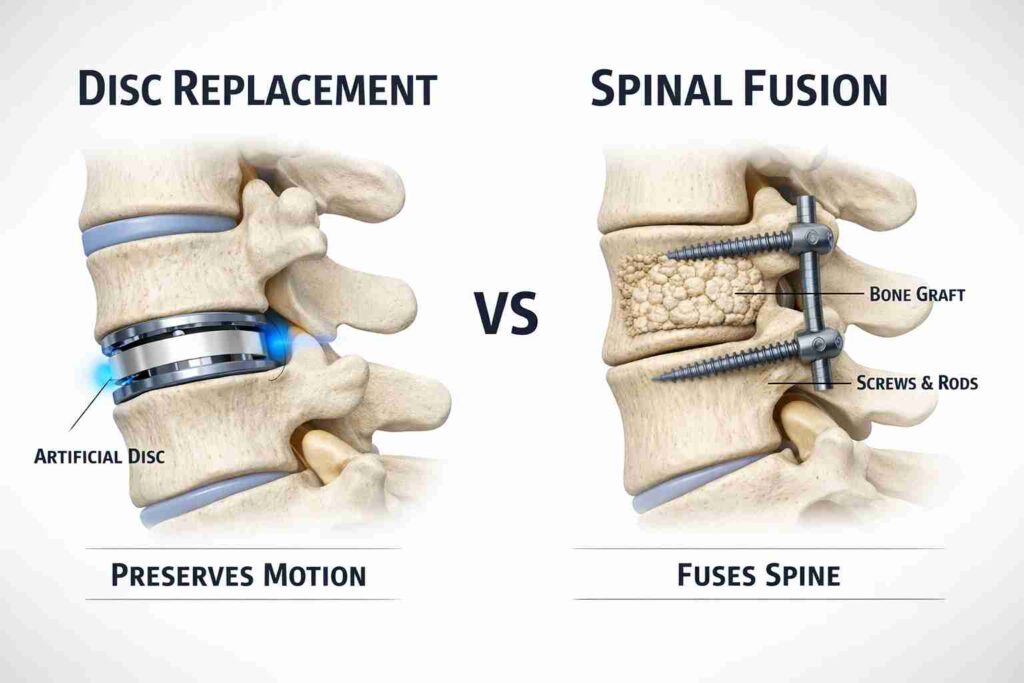
- Motion vs Stability
Disc replacement is a motion-preserving surgery, while fusion eliminates movement to improve spinal stability. Preserving motion may reduce the risk of adjacent segment degeneration and support better long-term function.
- When Fusion May Be Better
Fusion may be preferred in cases of instability, deformity, or multi-level disease where motion preservation is not appropriate.
- Individualised Decision
The choice between disc replacement and fusion depends on individual patient factors, not a one-size-fits-all approach.
Noticeable Differences At A Glance
| Aspect | Disc Replacement | Fusion |
| Motion | Preserved | Eliminated |
| Recovery | Faster (selected cases) | Slower |
| Adjacent Stress | Lower | Higher |
| Flexibility | Maintained | Reduced |
Benefits of Disc Replacement Surgery
- Preservation of spinal motion
- Reduced stress on adjacent levels
- Faster functional recovery in selected cases
- No need for fusion
A study demonstrates sustained outcomes for artificial cervical disc surgery (also known as Cervical Disc Arthroplasty) in appropriately selected patients.
Risks & Complications of Disc Replacement Surgery
- Implant-related issues: The artificial disc may shift, wear out, or loosen over time, sometimes requiring revision surgery.
- Nerve or spinal cord injury: There is a risk of nerve damage, which may cause pain, numbness, or weakness.
- Infection and bleeding: Surgical site infection or bleeding can occur, though uncommonly.
- Heterotopic ossification: Abnormal bone growth around the implant may reduce spinal movement.
What Happens Before Disc Replacement Surgery?
- Clinical Examination and Medical History: A detailed evaluation helps confirm the diagnosis.
- MRI, X-Ray, and Other Imaging: Together, they help identify the exact level and severity of disc damage.
- Medication Review and Surgical Planning: Ensures safety and optimises surgical outcomes.
Disc Replacement Surgery: Step-by-Step Overview
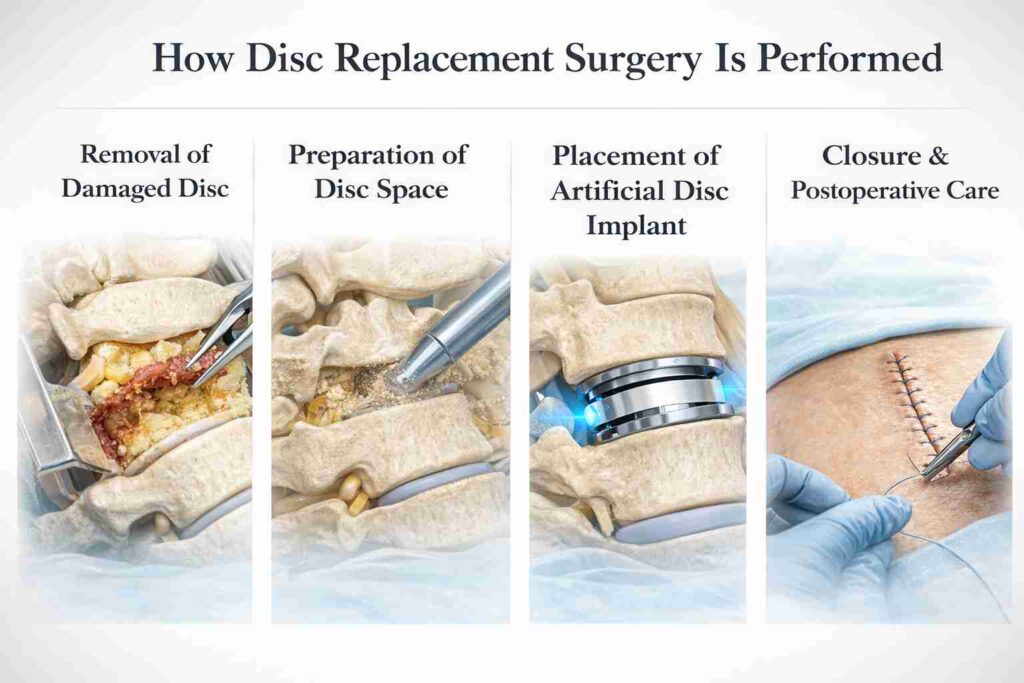
- Removal of the Damaged Disc: The affected disc is removed to relieve pressure on nerves.
- Preparation of the Disc Space: The space is prepared to ensure proper implant placement.
- Placement of the Artificial Disc Implant: The implant is inserted to restore motion and function.
- Closure and Immediate Postoperative Care: The surgical site is closed, and the patient is monitored during early recovery.
Recovery After Disc Replacement Surgery
| Phase | Timeline | Expectation |
| Walking | 24–48 hours | Early mobility |
| Light activity | 2–4 weeks | Gradual movement |
| Return to work | 2–6 weeks | Job-dependent |
| Full recovery | 6–12 weeks | Functional restoration |
Possible Complications After Disc Replacement Surgery
- Implant movement, wear, or loosening
- Persistent nerve symptoms or pain
- Difficulty swallowing after cervical procedures
- Need for reoperation in selected cases
When to Call Your Surgeon After Surgery
- Severe or worsening pain
- Weakness or numbness
- Fever or wound-related concerns
- Difficulty swallowing
- Changes in bladder or bowel function
Final Verdict
Disc replacement surgery offers a precise, motion-preserving solution for patients with clearly defined disc-related pain who have not improved with conservative care. By maintaining spinal movement and targeting the source of symptoms, it stands apart from traditional fusion in selected cases. The key is correct diagnosis, careful patient selection, and surgical expertise.
If you are considering disc replacement surgery, delaying the right decision can prolong pain and limit recovery potential. Consult Dr Purnajyoti Banerjee in London for a clear, expert-led evaluation and a treatment plan built around long-term outcomes—not guesswork.
Schedule your consultation today at this email address: purnajyoti74@gmail.com.
People Also Ask
What materials are used in artificial disc implants?
Artificial discs are typically made from medical-grade metal alloys and specialised polymers. These materials are designed to mimic natural disc movement while maintaining durability.
How is the correct size of an artificial disc selected?
Implant size is determined using preoperative imaging and intraoperative measurements. Proper sizing ensures stability, alignment, and optimal function.
Can disc replacement surgery be performed at multiple levels?
Multi-level disc replacement may be possible in selected cases. Suitability depends on spinal condition, alignment, and overall stability.
Is disc replacement surgery reversible?
The procedure is not reversible in the traditional sense. However, revision surgery or conversion to fusion may be performed if required.
Does disc replacement affect future spine surgeries?
It can influence future surgical planning, depending on implant position and spinal changes. Surgeons take this into account when considering long-term treatment strategies.
How does disc replacement impact spinal alignment?
The implant helps restore disc height and maintain natural spinal alignment. Proper positioning is critical to achieving balanced biomechanics.