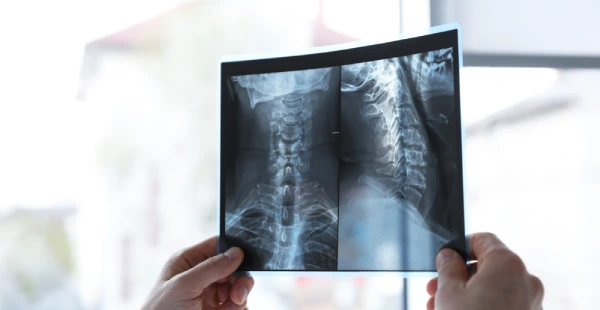
Transforaminal Epidural Injection Treatment in London
Transforaminal epidural injection provides precise relief for nerve-related pain. A targeted epidural injection delivered at the nerve exit (foramen) ensures medication is placed close to the inflamed spinal nerve root using local anaesthetic and corticosteroid medication.
This is used for leg or arm pain caused by a disc herniation or stenosis. Careful patient selection is essential for optimal outcomes.
Dr Purnajyoti Banerjee delivers expert, safe treatment with detailed evaluation. This is more targeted than interlaminar or caudal epidural injections, which focus on nerve-dominant symptoms and support better function.

Targeted Transforaminal Epidural Injection in London
A transforaminal epidural steroid injection uses X-ray (fluoroscopy) guidance with contrast dye for accuracy. A selective nerve root epidural injection effectively targets the specified nerve root.
Targeted epidural injection for sciatica eases radiating leg pain. Lumbar transforaminal epidural injection is common for lower spine issues.
What To Expect?
Radiating pain into the leg or arm is the primary concern.
This procedure directly calms the irritated nerve root.
Dr Purnajyoti Banerjee performs an X-ray guided transforaminal epidural with precision.
It is a day-case procedure performed under strict safety protocols
You rest briefly and return home the same day
Relief may develop over days and last weeks to months
Who Is This Treatment Designed For
A transforaminal epidural injection suits patients with dominant nerve pain radiating from the spine that has not responded well to rest, physiotherapy, or oral medications.

It is particularly appropriate for:
Sciatica with shooting leg pain
Arm pain from cervical nerve irritation
Symptoms worsened by walking or standing
Discomfort linked to a disc bulge or narrowing
Cases where nerve inflammation is the main issue
Used when nerve pain predominates over back pain, this option provides targeted treatment.
What Are The Expected Benefits
Decreased radiating pain in the leg or arm
Easier walking and daily activities
Improved sleep and reduced night pain
Lower dependence on painkillers
Pain relief to allow rehabilitation and avoid or delay surgery
Recovery And Risk Considerations
You remain in the clinic briefly after the injection and head home the same day. Mild soreness or temporary numbness may occur for a few days. Light activity is encouraged, but avoid strenuous tasks initially.
Temporary flare in symptoms
Minor bruising at the site
Brief weakness or tingling
Procedure At A Glance
| Element | Details |
|---|---|
| Setting | Specialist outpatient spine clinic |
| Duration | Typically 15–30 minutes |
| Numbing method | Local anaesthetic used |
| Imaging | X-ray (fluoroscopy) with contrast |
| Discharge | Same-day return home |
Regain Control And Quality of Life With Expert Care
Radiating nerve pain doesn’t resolve on its own. A transforaminal epidural injection in London, carefully administered by Dr Purnajyoti Banerjee, can target the source and restore function with precision.
Frequently Asked Questions
What does a transforaminal epidural injection treat?
It targets inflammation around a spinal nerve root to relieve radiating pain in the leg or arm from disc herniation or stenosis.
How soon does relief begin?
The local anaesthetic works quickly; steroid effects build over days to weeks. Many notice significant improvement within 1–2 weeks.
Is the procedure uncomfortable?
The area is numbed first. Most patients feel only mild pressure or brief discomfort during the guided injection.
How long can relief last?
Pain relief often lasts weeks to months. Results vary by condition; rehabilitation helps extend benefits.
What if symptoms return?
A follow-up review assesses the response. Repeat injections or further options may be considered as appropriate.
Other Injections

Caudal Epidural Injection

Cervical Nerve Root Block Injection

Coccyx Injection

Cortisone Injection

Facet Joint Injection

Hyaluronidase Injection

Image Guided Spinal Injection
Back Pain Injection

Tendonitis Injection

Medial Branch Block Injection

Platelet Rich Plasma Injection

Spinal Nerve Root Block Injection

Trigger Point Injection
Ultrasound Guided Injection