Cervical Disc Replacement Surgery in London
When a damaged disc in your neck causes persistent pain, numbness, or weakness that hasn’t improved with non-surgical care, cervical disc replacement surgery may be an option to preserve your natural movement.
Dr Purnajyoti Banerjee offers this advanced procedure to patients seeking relief from nerve root compression while preserving neck mobility.

What Is Cervical Disc Replacement?
The procedure uses an anterior (front-of-neck) approach with a small incision, typically 3-4cm long. Through this access point, the damaged disc is removed, and the artificial cervical disc replacement device is positioned between the vertebrae. This addresses nerve root compression causing arm pain or tingling whilst preserving the spine’s natural mechanics.
When Is Cervical Disc Replacement Recommended?
This treatment for cervical degenerative disc disease is most effective in specific clinical situations. Who is suitable for cervical disc replacement (candidate criteria) depends on several factors that Dr Purnajyoti Banerjee evaluates during consultation.
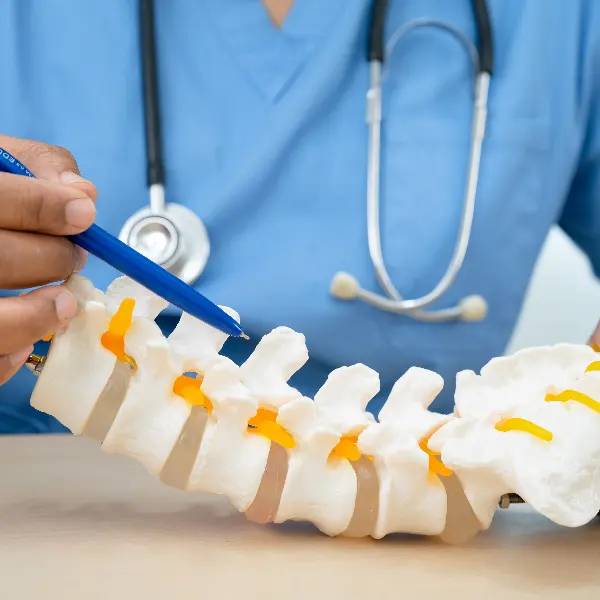
Ideal Candidate Criteria
Common Conditions Treated
Cervical Disc Herniation and Nerve Compression
Degenerative Cervical Disc Disease
Disc replacement restores spacing and maintains mobility at the affected level.
Cervical Disc Replacement vs Fusion
| Aspect | Disc Replacement | Fusion |
|---|---|---|
| Motion | Preserves neck movement | Eliminates motion at the affected area |
| Adjacent Levels | Lower risk of future problems | Higher stress on neighbouring discs |
| Recovery | Faster return to activity | Longer healing period |
| Revision Risk | Slightly higher long-term | Lower revision rate |
Expected hospital stay and recovery timeline
Hospital Stay and Early Recovery
- Hospital Stay: 1 night (some go home the same day)
- Week 1-2: Neck collar may be worn; gentle activities only
- Week 4-6: Return to desk work and light daily tasks
- Week 6-12: Gradual return to physical work and exercise
- Months 3-6: Full recovery for most patients
Cervical Disc Replacement Surgery- Post-Operative Guidance
- Walking: Start gentle walking from day one to improve circulation and recovery
- Posture: Maintain a neutral neck position and avoid prolonged downward looking
- Lifting: Do not lift more than 2–3 kg during the first 6 weeks
- Movement: Avoid twisting or sudden neck motions in the early phase
- Physiotherapy: Follow your rehabilitation plan exactly as advised
This structured approach helps stabilise the spine while your body heals.
Benefits of Private Cervical Disc Replacement
Don’t Let Neck and Arm Pain Define Your Routine
Frequently Asked Questions
How long does the cervical disc replacement procedure typically take?
Will patients need to wear a neck brace following surgery?
Can the artificial disc wear out or require future replacement?
When can patients resume driving after cervical disc replacement?
Does disc replacement guarantee the prevention of all future neck problems?
Other Treatments
Cervical Fusion Surgery
Keyhole Spine Surgery
Kyphoplasty Surgery
Lumbar Fusion Surgery

Spinal Decompression Surgery
Spinal Disc Surgery

Frozen Shoulder Manipulation

Orthopedic Injuries
Radio Frequency Ablation

Shockwave Therapy
Sports Injuries
Spinal Stenosis

Slipped Disc