

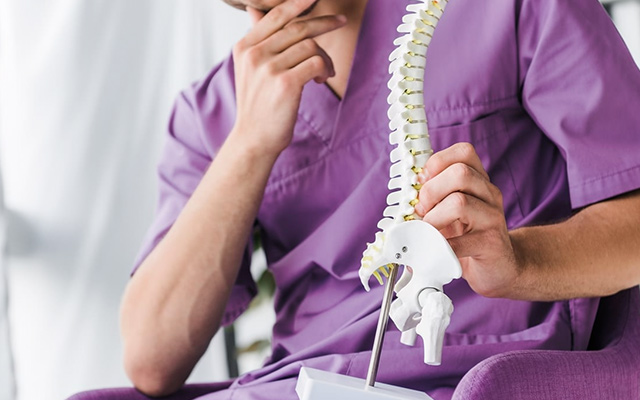
Back pain has a way of slowly taking over life. It starts with discomfort, turns into limitations, and eventually affects work, sleep, and everyday movement.
When medications, physiotherapy, and lifestyle changes stop working, spinal fusion surgery enters the conversation.
It is one of the most discussed yet misunderstood spine procedures. Patients frequently ask whether it’s safe, who truly needs it, and what life looks like afterwards.
This guide breaks it down clearly from the perspective of Dr. Purnajyoti Banerjee, an experienced spinal surgeon in London.
What is spinal fusion surgery?
Spinal fusion surgery is a procedure that permanently joins two or more vertebrae to stabilise the spine and reduce pain caused by abnormal movement.
In simple terms, the surgery stops painful motion between vertebrae. This is done using bone grafts, screws, and rods that help the bones heal into a single solid unit over time.
It is done as a day operation and patients can go home on the day of surgery. This is due to the minimally invasive surgery technique and novel enhanced recovery. This allows patients to avoid a hospital stay, even with complex spinal surgery.
When is spinal fusion recommended?
Spinal fusion is recommended when structural instability in the spine causes persistent pain or nerve symptoms that do not improve with non-surgical treatment.
Doctors do not jump to fusion lightly. It is usually considered only after months of conservative care have failed.

Typical scenarios include:
- Chronic back pain is not improving with treatment
- Nerve pain radiating to arms or legs
- Recurrent disc herniation
- Failed back pain treatment options
- Treatment for spinal instability
A spine specialist will always confirm diagnosis with imaging, physical examination, and symptom correlation before advising surgery.
Who needs spinal fusion surgery?
Patients with severe spinal instability, nerve compression, or structural damage that limits daily function may need spinal fusion surgery.
This includes people who:
- Cannot sit, stand, or walk without pain
- Have weakness, numbness, or loss of coordination
- Experience worsening symptoms despite treatment
- Have spine conditions affecting work and sleep
Spinal fusion may not be appropriate for people with non-specific back pain without clear structural instability, or for those who continue to improve with physiotherapy or pain management.
If you’re unsure whether spinal fusion is the right step or simply want clarity on your diagnosis, a detailed spine assessment with Dr. Purnajyoti Banerjee can help you understand your options before making any decisions.
What are the benefits of spinal fusion surgery?
The main benefit of spinal fusion surgery is long-term pain relief by stabilising the spine and protecting nerves from ongoing damage.
Key benefits include:
- Reduced chronic back or neck pain
- Improved spinal stability
- Relief from nerve compression symptoms
- Better posture and alignment
- Improved ability to perform daily activities
Benefits at a glance
| Benefit | What it means for patients |
| Pain reduction | Less mechanical and nerve pain |
| Stability | Prevents abnormal vertebral movement |
| Nerve protection | Reduces numbness and weakness |
| Durability | Long-term structural support |
| Function | Better mobility and quality of life |
For many patients, the spinal fusion success rate is high when the right diagnosis and surgical technique are used.
What are the risks of spinal fusion surgery?
Like all major surgeries, spinal fusion carries risks, but careful planning and modern techniques significantly reduce complications.
Common spinal fusion surgery risks include:
- Infection
- Blood loss
- Nerve irritation
- Delayed bone healing
- Hardware-related discomfort
Less common complications:
- Non-union (fusion not healing fully)
- Adjacent segment degeneration
- Persistent pain despite surgery
Dr. Purnajyoti Banerjee, an experienced spinal surgeon in London, discusses these openly and explains how risks are minimised using advanced spine surgery techniques.
Is spinal fusion surgery safe?
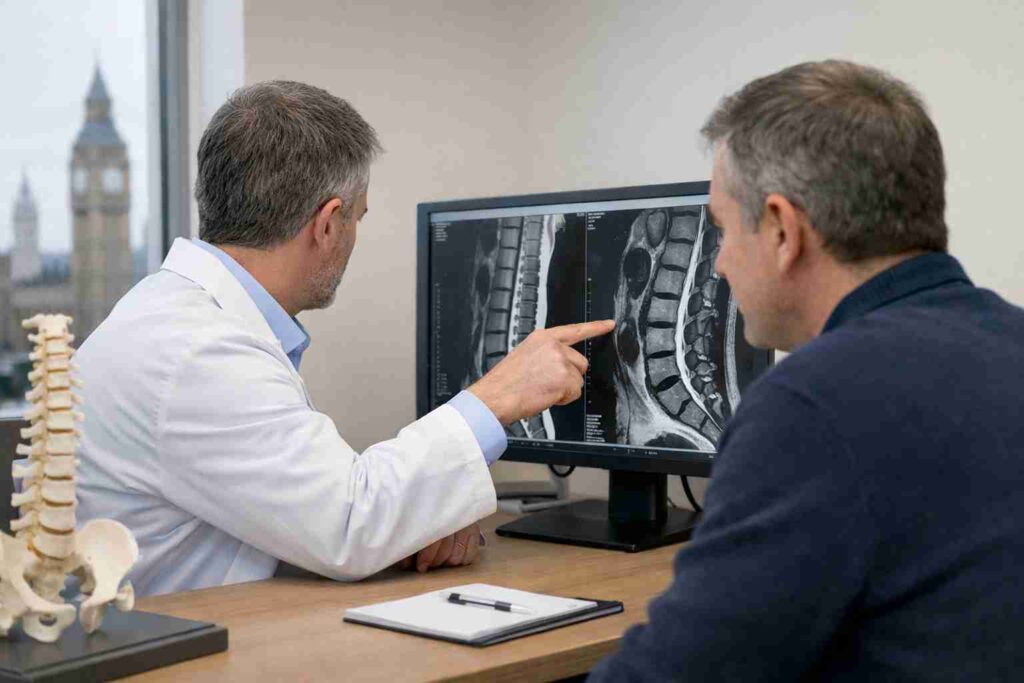
Yes, spinal fusion surgery is generally safe when performed by an experienced specialist and when patients are properly selected.
Safety depends on:
- Accurate diagnosis
- Surgical expertise
- Overall patient health
- Rehabilitation compliance
Modern minimally invasive spinal fusion methods reduce muscle damage, blood loss, and hospital stay, improving safety and recovery.
How is spinal fusion surgery performed?
Spinal fusion surgery involves removing the pain-causing structure and stabilising the spine using implants and bone grafts.
Spinal fusion procedure explained simply:
- The problem with the disc or bone is addressed
- A bone graft is placed between the vertebrae.
- Screws and rods provide stability
- Bone heals over months to form a fusion
Approaches vary depending on the condition:
- Posterior fusion
- Anterior fusion
- Lateral fusion
A back surgery specialist chooses the approach that offers the best outcome with the least disruption.
Spinal fusion vs disc replacement: which is better?
Spinal fusion is better for addressing instability, while disc replacement is better for motion-preserving cases.
| Aspect | Spinal Fusion | Disc Replacement |
| Motion | Eliminates movement | Preserves movement |
| Stability | High | Moderate |
| Indications | Instability, deformity | Disc degeneration |
| Suitability | Wider patient range | Select cases only |
An expert spine surgery doctor evaluates both options before recommending surgery.
What is the recovery time after spinal fusion surgery?
Spinal fusion recovery time usually ranges from 3 to 6 months, with continued improvement up to one year.
Recovery timeline
- Hospital stay: 2–5 days
- Light activities: 4–6 weeks
- Physiotherapy: starts early
- Full fusion: 6–12 months
Patients are guided through a structured rehabilitation plan as per age, condition, and surgery type.
What is life like after spinal fusion surgery?
Most patients experience reduced pain, improved stability, and better daily function after spinal fusion surgery.
Long-term effects of spinal fusion include:
- Improved posture
- Reduced nerve symptoms
- Adjusted spinal flexibility
- Ability to resume normal activities
With proper rehab, many patients return to work, exercise, and daily routines comfortably.
How much does spinal fusion surgery cost?
Spinal fusion surgery cost varies based on complexity, hospital choice, and surgical approach.
Cost factors include:
- Number of spinal levels fused
- Type of implants used
- Hospital stay duration
- Rehabilitation needs
How does Dr. Purnajyoti Banerjee approach spinal fusion surgery?
Dr. Purnajyoti Banerjee is recognised as an experienced spinal surgeon in London. He is trusted because of his evidence-based, patient-centric care.
His approach focuses on:
- Accurate diagnosis before surgery
- Exploring non-surgical options first
- Using minimally invasive techniques when possible
- Creating a personalised spine treatment plan
- Supporting patients through recovery and beyond
This balance of precision and compassion is what defines trusted spinal surgery care.
Key takeaways for patients considering spinal fusion surgery
Spinal fusion surgery is not about quick fixes—it’s about restoring stability, reducing pain, and protecting nerves for the long term. When recommended appropriately and performed by the right specialist, it can be life-changing.
Understanding risks, benefits, recovery, and alternatives empowers patients to make confident decisions about their spine health.
Dr. Purnajyoti Banerjee offers comprehensive spine evaluations, clear explanations, and treatment plans built around long-term outcomes—not rushed decisions.
Speak with a spine specialist who puts clarity first
Connect with Dr. Purnajyoti Banerjee, a spinal surgeon in London, at this email address: purnajyoti74@gmail.com for spinal health care.
People Also Ask
Is spinal fusion surgery a major operation?
Yes. It is a major surgery that stabilises the spine and requires careful recovery.
How long does it take to recover from spinal fusion surgery?
Most patients recover in 3–6 months, with full healing taking up to a year.
Does spinal fusion surgery permanently limit movement?
It limits movement only at the fused segment, not the entire spine.
Is spinal fusion surgery safe for older adults?
Yes, when overall health is stable, and surgery is properly planned.
What are the long-term effects of spinal fusion surgery?
Long-term effects often include pain relief, improved stability, and better daily function.
Can spinal fusion surgery fail or need revision?
In rare cases, fusion may not heal fully, and revision surgery may be needed.
Is spinal fusion better than disc replacement?
Fusion is better for instability, while disc replacement suits select cases.